Home Blog Page 215

Matthew McConaughey’s ‘Gold’ Gets Christmas Release

0

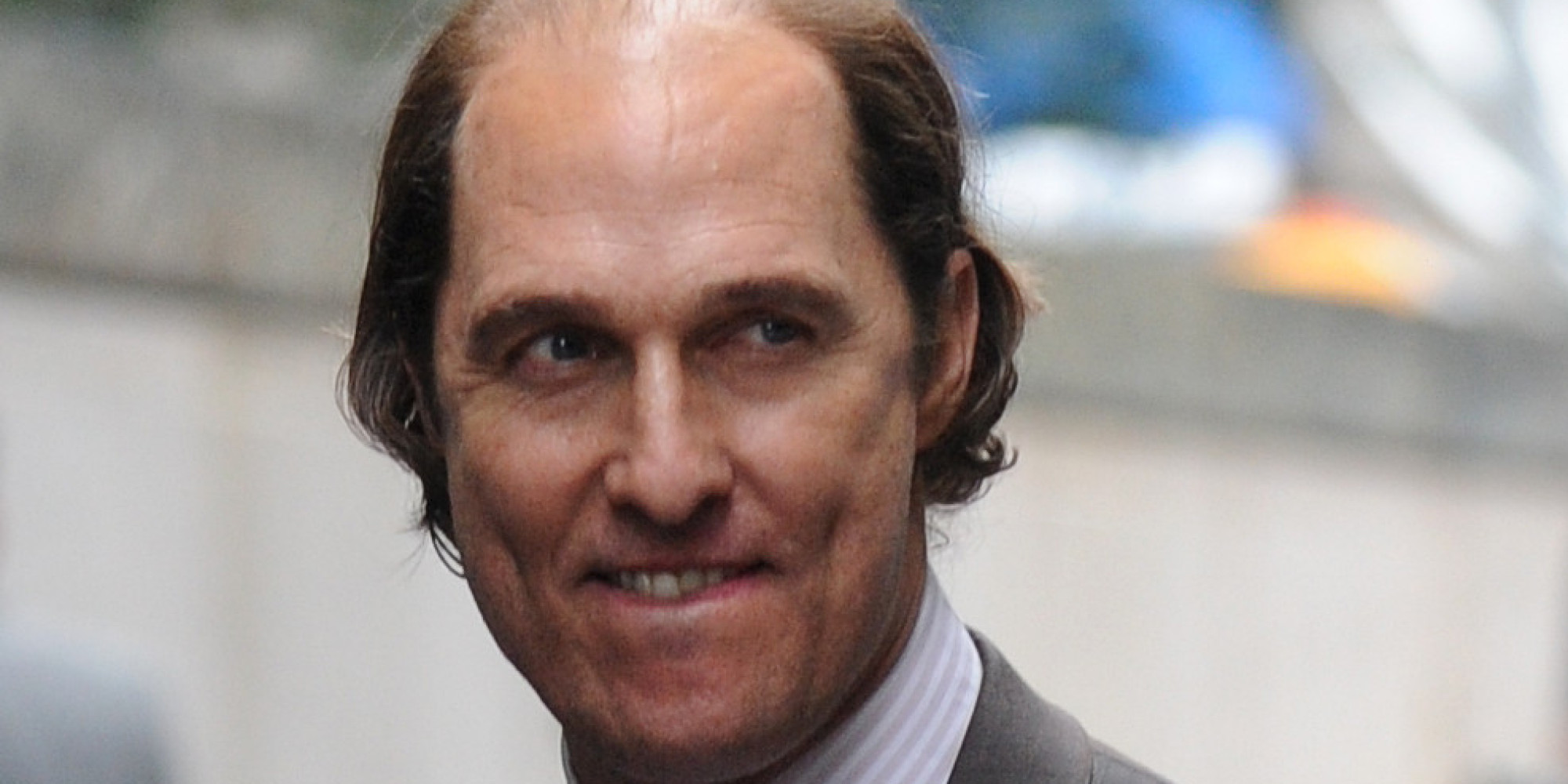
TWC-Dimension has given a Dec. 25 release date to Matthew McConaughey’s adventure drama “Gold.”

McConaughey stars as a modern-day prospector desperate for a lucky break who teams up with a similarly eager geologist — played by Edgar Ramirez — and sets off to find gold in the uncharted jungle of Indonesia.

“Syriana” helmer Stephen Gaghan directed from a script by Patrick Massett and John Zinman.

“Gold” is financed by Black Bear Pictures and Black Bear’s Teddy Schwarzman and HWY 61’s Michael Nozik served as producers alongside Massett, Zinman and McConaughey. HWY 61 partner Paul Haggis, Richard Middleton and Black Bear’s Ben Stillman are executive producers.

Bryce Dallas Howard portrays the longtime girlfriend of McConaughey’s character, with her loyalty tested as the hunt for gold pushes their relationship to its breaking point. Corey Stoll, Toby Kebbell, Bruce Greenwood and Stacy Keach also star.

Christmas is on a Sunday, so “Gold” is the only film slated to open that day. Disney’s “Rogue One: A Star Wars Story” opens nine days earlier on Dec. 16 along with Warner’s Will Smith drama “Collateral Beauty.”

TWC recently pushed Alicia Vikander’s “Tulip Fever” out of July and back to February.

The company has three other films set for the remainder of 2016: “The Founder,” with Michael Keaton as McDonald’s founder Ray Kroc, coming on Aug. 5; “Hands of Stone,” about boxer Roberto Duran, due on Aug. 26; and “Lion,” a Thanksgiving opener about an Indian boy who makes his way home after being adopted by an Australian couple.

Full article: Matthew McConaughey’s ‘Gold’ Gets Christmas Release

Featured photo credit: http://www.huffingtonpost.co.uk/2015/10/05/matthew-mcconaughey-gold-pictures_n_8243724.html

Disclaimer© 2010 Junior Gold Report

Junior Gold Report’ Newsletter: Junior Gold Report’s Newsletter is published as a copyright publication of Junior Gold Report (JGR).  No Guarantee as to Content:  Although JGR attempts to research thoroughly and present information based on sources we believe to be reliable, there are no guarantees as to the accuracy or completeness of the information contained herein. Any statements expressed are subject to change without notice. JGR, its associates, authors, and affiliates are not responsible for errors or omissions. Consideration for Services: JGR, it’s editor, affiliates, associates, partners, family members, or contractors may have an interest or position in featured, written-up companies, as well as sponsored companies which compensate JGR. JGR has been paid by the company written up. Thus, multiple conflicts of interests exist. Therefore, information provided herewithin should not be construed as a financial analysis but rather as an advertisement. The author’s views and opinions regarding the companies featured in reports are his own views and are based on information that he has researched independently and has received, which the author assumes to be reliable. No Offer to Sell Securities: JGR is not a registered investment advisor. JGR is intended for informational, educational and research purposes only. It is not to be considered as investment advice. Subscribers are encouraged to conduct their own research and due diligence, and consult with their own independent financial and tax advisors with respect to any investment opportunity. No statement or expression of any opinions contained in this report constitutes an offer to buy or sell the shares of the companies mentioned herein. Links: JGR may contain links to related websites for stock quotes, charts, etc. JGR is not responsible for the content of or the privacy practices of these sites. Release of Liability: By reading JGR, you agree to hold Junior Gold Report its associates, sponsors, affiliates, and partners harmless and to completely release them from any and all liabilities due to any and all losses, damages, or injuries (financial or otherwise) that may be incurred.

Forward Looking Statements
Except for statements of historical fact, certain information contained herein constitutes forward-looking statements. Forward looking statements are usually identified by our use of certain terminology, including “will”, “believes”, “may”, “expects”, “should”, “seeks”, “anticipates”, “has potential to”, or “intends’ or by discussions of strategy, forward looking numbers or intentions. Such forward-looking statements involve known and unknown risks, uncertainties and other factors which may cause our actual results or achievements to be materially different from any future results or achievements expressed or implied by such forward-looking statements. Forward-looking statements are statements that are not historical facts, and include but are not limited to, estimates and their underlying assumptions; statements regarding plans, objectives and expectations with respect to the effectiveness of the Company’s business model; future operations, products and services; the impact of regulatory initiatives on the Company’s operations; the size of and opportunities related to the market for the Company’s products; general industry and macroeconomic growth rates; expectations related to possible joint and/or strategic ventures and statements regarding future performance. Junior Gold Report does not take responsibility for accuracy of forward looking statements and advises the reader to perform own due diligence on forward looking numbers or statements.

Greenspan, Gold, and the Banality of Evil

0


By  Stefan Gleason, Originally Published on Money Metals Exchange

Under certain circumstances, seemingly decent human beings are capable of horrific things.

So it is with Former Federal Reserve Chairman Alan Greenspan, who parlayed his sound money bona fides into the top post at America’s private banking cartel and current issuer of our un-backed currency. In betrayal of his own stated free-market principles, Greenspan spent his tenure at the Fed pumping up financial markets with easy money and enabling runaway government spending commitments.

Today, however, the “maestro” of central banking is playing a very different tune. He’s warning against an inevitable crisis resulting from the very policies he helped implement.

Perhaps it’s a late-life crisis of conscience. Perhaps he feels guilty. Perhaps at age 90, he just feels free to speak his mind in a way that most current and former Fed officials don’t. In any event, Alan Greenspan is very concerned about the legacy he will leave and now seems genuinely worried about the country’s financial future.

Greenspan: “We Are in the Very Early Days of a Crisis Which Has Got a Way to Go”

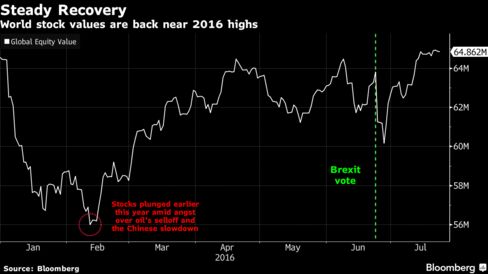
Following the Brexit shock and the market volatility that followed in its aftermath, Greenspan scolded British officials for the “mistake” of allowing the vote to leave the European Union to take place. He predicted more dominos would fall. In an interview with Bloomberg last week he said, “We are in very early days of a crisis which has got a way to go.”

It’s not surprising to hear Greenspan echo other pro-globalist voices in bemoaning the potential disintegration of the European Union. Central bankers, commercial bankers, governments, and international corporations all have vested interests in pushing for what they call “integration.”

Greenspan2

Outgoing United Kingdom Independence Party (UKIP) leader Nigel Farage declared the successful Brexit referendum “a victory for ordinary people” against “multinationals,” “big merchant banks,” and “big politics.”

As global stock markets protested, the gold market surged to new 2016 highs post-Brexit.

The success of Brexit, which defied the predictions of pollsters, may bode well for Donald Trump. His unconventional campaign for the presidency hits on similar anti-globalist, anti-establishment themes.

Meanwhile in Congress, renegade Republican Rep. Thomas Massie is pushing what he calls an “Amexit” from the United Nations. Massie’s American Sovereignty Restoration Act (HR 1205) would allow the U.S. to leave the United Nations and cease sending $8 billion per year in “contributions” to the world body.

Anti-establishment politics irks elites in central banking and elsewhere who institutionally prefer the status quo. But what really worries former Fed chair Alan Greenspan isn’t the upcoming election or any bill in Congress. It’s the $19+ trillion national debt and the trillions more in future spending commitments that are already baked into the cake.

Greenspan: Entitlements Time Bomb “Is What the Election Should Be All About”

The problem, as Greenspan sees it, is the structure of Social Security, Medicare, and other “mandatory” spending programs. Through them, ever growing numbers of people “are entitled to certain expenditures out of the budget without any reference to how it’s going to be funded. Where the productivity levels are now, we are lucky to get something even close to two percent annual growth rate. That annual growth rate of two percent is not adequate to finance the existing needs.”

Greenspan’s prognosis: “I don’t know how it’s going to resolve, but there’s going to be a crisis.”

crisis_graph

His pessimism stems from the political reality that elected representatives lack the will to address entitlement spending. “Republicans don’t want to touch it. Democrats don’t want to touch it. They don’t even want to talk about. This is what the election should be all about in the United States. You will never hear one word from either side,” Greenspan told Bloomberg.

He is right, of course. Even self-described “conservative” Republicans who tout smaller government in principle don’t actually vote for it in practice. Mathematically, they can’t.

Once you rule out cuts in military and entitlement spending, as most Republicans do, what’s left on the table to cut is small potatoes. Going after waste, fraud, and abuse isn’t going to stop the bleeding of red ink as millions of Baby Boomers withdraw from the workforce and expect to collect trillions in unfunded benefits that have been promised to them.

The good news (if you’re a politician) is that under our monetary system you don’t ever have to cut. You don’t have to ensure that your promises of future benefits can be met with revenues. You can be as fiscally irresponsible as the Federal Reserve’s willingness to expand the currency supply permits you to be. The Fed stands ready to buy up government bonds in unlimited quantities, making a sovereign default practically impossible and enabling the government to borrow at artificially low interest rates.

The government debt bubble is a product of the fiat monetary system. Under a gold standard, Congress would be limited by what it could actually extract from the people in taxes.

gold_money

Here’s what one of the world’s most famous economists said recently about gold: “If we went back on the gold standard and we adhered to the actual structure of the gold standard as it existed prior to 1913, we’d be fine. Remember that the period 1870 to 1913 was one of the most aggressive periods economically that we’ve had in the United States, and that was a golden period of the gold standard.”

The self-described “gold bug” economist quoted above is none other than Alan Greenspan!

Yes, the longest-serving chairman of the world’s most powerful fiat money establishment.

The same Alan Greenspan who helped both Republican and Democrat administrations drive up the national debt from $2.4 trillion to $8.5 trillion in the years 1987-2006.

The same Alan Greenspan whose implicit open-ended backing of U.S. debt markets helped Congress grow unfunded liabilities by untold trillions more than is even reported in official debt figures.

The same Alan Greenspan who engaged in shocking interventions and currency devaluations, starting with bailing out Long Term Capital Management in 1998 and followed by a blowing up of the tech bubble, and, after its crash, the housing bubble.

Why Did Greenspan Commit His Horrific Monetary “Crimes”?

At last, Greenspan sees the light. Perhaps in private he always did. Before he helmed the Fed, he was known as a free-market advocate who associated with novelist-philosopher Ayn Rand and strongly favored a gold standard. But unlike a Randian hero, Greenspan compromised his principles in his pursuit of power, fame, and social status.

Taken to its extreme, the phenomenon of Greenspan’s tenure was akin to the “banality of evil,” a concept that came into prominence following Hannah Arendt’s book about the Nazi trials. Arendt’s thesis, as described by author Edward Herman, was that people who carry out unspeakable crimes aren’t necessarily crazy fanatics, but rather “ordinary individuals who simply accept the premises of their state and participate in any ongoing enterprise with the energy of good bureaucrats.”

Why did Greenspan play a key role in undermining sound fiscal policies and sound money while he was at the height of his power and influence at the Fed? Why did he do so much to fuel asset bubbles and reckless debt spending? Only Alan Greenspan himself knows for sure, but we’re the ones paying the price.

Stefan Gleason

Stefan Gleason is President of Money Metals Exchange, the national precious metals company named 2015 “Dealer of the Year” in the United States by an independent global ratings group. A graduate of the University of Florida, Gleason is a seasoned business leader, investor, political strategist, and grassroots activist. Gleason has frequently appeared on national television networks such as CNN, FoxNews, and CNBC, and his writings have appeared in hundreds of publications such as the Wall Street Journal, Detroit News, Washington Times, and National Review.

Full article: Greenspan, Gold, and the Banality of Evil

Disclaimer© 2010 Junior Gold Report

Junior Gold Report’ Newsletter: Junior Gold Report’s Newsletter is published as a copyright publication of Junior Gold Report (JGR).  No Guarantee as to Content:  Although JGR attempts to research thoroughly and present information based on sources we believe to be reliable, there are no guarantees as to the accuracy or completeness of the information contained herein. Any statements expressed are subject to change without notice. JGR, its associates, authors, and affiliates are not responsible for errors or omissions. Consideration for Services: JGR, it’s editor, affiliates, associates, partners, family members, or contractors may have an interest or position in featured, written-up companies, as well as sponsored companies which compensate JGR. JGR has been paid by the company written up. Thus, multiple conflicts of interests exist. Therefore, information provided herewithin should not be construed as a financial analysis but rather as an advertisement. The author’s views and opinions regarding the companies featured in reports are his own views and are based on information that he has researched independently and has received, which the author assumes to be reliable. No Offer to Sell Securities: JGR is not a registered investment advisor. JGR is intended for informational, educational and research purposes only. It is not to be considered as investment advice. Subscribers are encouraged to conduct their own research and due diligence, and consult with their own independent financial and tax advisors with respect to any investment opportunity. No statement or expression of any opinions contained in this report constitutes an offer to buy or sell the shares of the companies mentioned herein. Links: JGR may contain links to related websites for stock quotes, charts, etc. JGR is not responsible for the content of or the privacy practices of these sites. Release of Liability: By reading JGR, you agree to hold Junior Gold Report its associates, sponsors, affiliates, and partners harmless and to completely release them from any and all liabilities due to any and all losses, damages, or injuries (financial or otherwise) that may be incurred.

Forward Looking Statements
Except for statements of historical fact, certain information contained herein constitutes forward-looking statements. Forward looking statements are usually identified by our use of certain terminology, including “will”, “believes”, “may”, “expects”, “should”, “seeks”, “anticipates”, “has potential to”, or “intends’ or by discussions of strategy, forward looking numbers or intentions. Such forward-looking statements involve known and unknown risks, uncertainties and other factors which may cause our actual results or achievements to be materially different from any future results or achievements expressed or implied by such forward-looking statements. Forward-looking statements are statements that are not historical facts, and include but are not limited to, estimates and their underlying assumptions; statements regarding plans, objectives and expectations with respect to the effectiveness of the Company’s business model; future operations, products and services; the impact of regulatory initiatives on the Company’s operations; the size of and opportunities related to the market for the Company’s products; general industry and macroeconomic growth rates; expectations related to possible joint and/or strategic ventures and statements regarding future performance. Junior Gold Report does not take responsibility for accuracy of forward looking statements and advises the reader to perform own due diligence on forward looking numbers or statements.
Climbing Gold and Silver’s Wall of Worry

0

Confidence is slippery, even when you are a metals investor sitting atop the best performing assets of 2016. It doesn’t help when 4 years of a miserable bear market remains fresh in our memories. Any weakness in prices and it can feel like markets are getting ready to plunge right back to $13 silver and $1,000 gold.

That feeling is called the “Wall of Worry”, and bulls are going to have to climb it by staying in the market even if their emotions are telling them to bail. Let’s review the last 6 weeks because they are quite instructional.

June 1st: Silver closed at $15.97 and gold at $1,213. Precious metals prices stood well below the highs put in at the end of April and plenty of people declared the end of metals bull run.

There was plenty of reason to worry. At the time, markets were obsessed with Federal Reserve policy and sentiment was darkening.

The year had opened with turmoil in the stock markets. The S&P 500 was plummeting in response to a December rate hike with the expectation of more hikes to come. Precious metals surged as investors sought refuge from crumbling stocks.

In mid-February Fed officials responded to the collapse in stock prices by reversing their rhetoric on interest rates. They reaffirmed their undying commitment to growth and prosperity through freshly printed cash!

Metals got another boost and the S&P 500 took off like a rocket.

So much so that, by June, schizophrenic officials had reversed direction once again. They sounded an economic “all clear” and began jawboning about raising rates. Some thought they might even get around to hiking as soon as the FOMC meeting in the middle of the month.

June 3rd: The Bureau of Labor Statistics (BLS) released a disastrous jobs report for May, missing even the most conservative estimates by a mile. The consensus on more rate hikes simply blinked out of existence. Forget higher interest rates, investors began wondering if Negative Interest Rate Policy would soon be making its U.S. debut.

Gold prices jumped by $80/oz to $1,299/oz over the following 2 weeks. Silver raced ahead by $1.50 to $17.54/oz.

Then, in the days leading up to the Brexit vote, metals prices take a beating. Everyone is watching, but no one expects the British to vote “Leave.”

June 23rd: United Kingdom voters shock people everywhere. Stock markets crash, there is turmoil in the foreign exchange markets and people wonder if Brexit represents the kick-off for the next worldwide financial crisis.

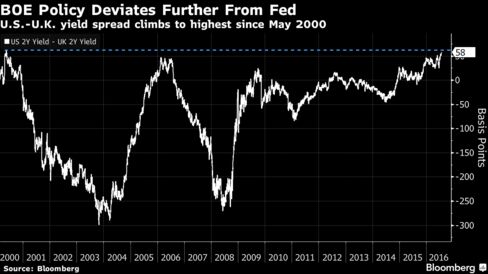
Not only were interest rate hikes back off of the table, central bankers stood out front and did what they do best: they assured markets that no one need pay for their sins. They stood at the ready to provide “liquidity,” also known as unlimited cash to prop up overleveraged and mismanaged banks and hedge funds who lost bets they couldn’t afford on Brexit.

The turmoil and safe haven buying drove the gold price from $1,257 to $1,367 by July 8th. Silver jumped from $17.32 to $20.31 over the same period.

July 8th: Stock markets shrugged off the turmoil following the Brexit vote. Two days of heavy selling immediately after Brexit were followed by relentless buying.

Only investors were split. Some bought risk assets like stocks, figuring the hysteria surrounding Brexit was overdone.

Others bought safe haven assets including Treasuries and metals. They saw European banks in a lot of trouble. Italian banks needed a bailout and much larger banks – Deutsche Bank and Credit Suisse – were signaling the possibility of collapse as their share prices traded below the 2008 crisis lows.

Cue the next U.S. employment report. This time the BLS puts out a blockbuster number that beats expectations by a mile. That report and the continuing rally in stocks undermine interest in safe haven assets. People once again start whispering about the Fed raising interest rates. Metals and bonds both drifted lower.

So what have we learned? World events are unpredictable – perhaps even more so lately. And, in bull markets some of the biggest moves happen suddenly, when people least expect it. Blink and you’ve missed it. So you just have to hang on to your convictions, and your position, even when worry sets in.

Full article: Climbing Gold and Silver’s Wall of Worry

Disclaimer© 2010 Junior Gold Report

Junior Gold Report’ Newsletter: Junior Gold Report’s Newsletter is published as a copyright publication of Junior Gold Report (JGR).  No Guarantee as to Content:  Although JGR attempts to research thoroughly and present information based on sources we believe to be reliable, there are no guarantees as to the accuracy or completeness of the information contained herein. Any statements expressed are subject to change without notice. JGR, its associates, authors, and affiliates are not responsible for errors or omissions. Consideration for Services: JGR, it’s editor, affiliates, associates, partners, family members, or contractors may have an interest or position in featured, written-up companies, as well as sponsored companies which compensate JGR. JGR has been paid by the company written up. Thus, multiple conflicts of interests exist. Therefore, information provided herewithin should not be construed as a financial analysis but rather as an advertisement. The author’s views and opinions regarding the companies featured in reports are his own views and are based on information that he has researched independently and has received, which the author assumes to be reliable. No Offer to Sell Securities: JGR is not a registered investment advisor. JGR is intended for informational, educational and research purposes only. It is not to be considered as investment advice. Subscribers are encouraged to conduct their own research and due diligence, and consult with their own independent financial and tax advisors with respect to any investment opportunity. No statement or expression of any opinions contained in this report constitutes an offer to buy or sell the shares of the companies mentioned herein. Links: JGR may contain links to related websites for stock quotes, charts, etc. JGR is not responsible for the content of or the privacy practices of these sites. Release of Liability: By reading JGR, you agree to hold Junior Gold Report its associates, sponsors, affiliates, and partners harmless and to completely release them from any and all liabilities due to any and all losses, damages, or injuries (financial or otherwise) that may be incurred.

Forward Looking Statements
Except for statements of historical fact, certain information contained herein constitutes forward-looking statements. Forward looking statements are usually identified by our use of certain terminology, including “will”, “believes”, “may”, “expects”, “should”, “seeks”, “anticipates”, “has potential to”, or “intends’ or by discussions of strategy, forward looking numbers or intentions. Such forward-looking statements involve known and unknown risks, uncertainties and other factors which may cause our actual results or achievements to be materially different from any future results or achievements expressed or implied by such forward-looking statements. Forward-looking statements are statements that are not historical facts, and include but are not limited to, estimates and their underlying assumptions; statements regarding plans, objectives and expectations with respect to the effectiveness of the Company’s business model; future operations, products and services; the impact of regulatory initiatives on the Company’s operations; the size of and opportunities related to the market for the Company’s products; general industry and macroeconomic growth rates; expectations related to possible joint and/or strategic ventures and statements regarding future performance. Junior Gold Report does not take responsibility for accuracy of forward looking statements and advises the reader to perform own due diligence on forward looking numbers or statements.
What is a Bitcoin Worth? It Might Depend on the Price of Gold

0

By 

Gold has long been a preferred currency for investors, with part of its appeal stemming from it physicality. Bitcoin, on the other hand, is a new currency option that is notable for its intangibility — the cryptocurrency exists solely on the internet. 

And so, how might these radically different currencies intersect? MarketWatch columnist David Weidner proposes that they are in direct competition to be the currency that investors turn to in times of economic instability.

Gold and bitcoin function similarly during periods of instability

Despite some key differences, gold and bitcoin function similarly. For instance, gold has historically been seen as a stable investment for those lacking faith in their country’s banks, government and currency. Likewise, bitcoin is famous for being a borderless, decentralized currency independent of such institutions.

Because of their independence from national currencies, both gold and bitcoin are seen as desirable investments during times of economic and political instability. However, they are desirable for different reasons — gold is thought to retain its value during times of turmoil, while limitations on bitcoin supply make the currency appealing.

In terms of how bitcoin supply works, bitcoins are “mined” using a distributed consensus system that confirms previous purchases by logging them in a shared public ledger called the blockchain. Essentially, the process controls the number of bitcoins that are available at one time. Furthermore, according to Bitcoin.org, the number of new bitcoins created each year is halved until it reaches the maximum of 21 million bitcoins in existence. In theory, this limited supply will help the currency maintain its value, rendering it appealing during periods of national economic insatiability.

The recent increase in bitcoin merchants in Argentina reflects this trend. The Financial Timesreported that the number of bitcoin merchants in Argentina has doubled in the last year, demonstrating the highest bitcoin adoption rate in Latin America. Bitcoin Magazine states that this increase is due to the country’s “overvaluation of exchange rates, unstable inflation and complicated economic dynamics.” Merchants’ decision turn to bitcoin to avoid the volatility of the Argentinian peso recalls the rapid investment in gold during the 2008 financial crisis.

Fluctuating value: what is a bitcoin worth?

As can be seen, both gold and bitcoin theoretically have the potential to be stable monetary standards that function independently of instability worldwide. And in Weidner’s opinion, though gold has a long history — and tangibility — behind it, it’s not necessarily the better option.

All in all, he believes that if gold doesn’t offer more stability, then there is no difference between it and the entirely internet-based bitcoin. The two currencies are therefore in direct competition, suggesting that bitcoin’s worth is directly tied to gold investing. Ultimately, it remains to be seen whether investors will turn to the Earth or the internet as a store of wealth in future periods of economic certainty.

Don’t forget to follow us @INN_Technology for real-time news updates.


This article was originally published on July 22, 2015 on Technology Investing News.

Securities Disclosure: I, Morag McGreevey, hold no direct investment interest in any company mentioned in this article.

Full article: What is a Bitcoin Worth? It Might Depend on the Price of Gold 

Disclaimer© 2010 Junior Gold Report

Junior Gold Report’ Newsletter: Junior Gold Report’s Newsletter is published as a copyright publication of Junior Gold Report (JGR).  No Guarantee as to Content:  Although JGR attempts to research thoroughly and present information based on sources we believe to be reliable, there are no guarantees as to the accuracy or completeness of the information contained herein. Any statements expressed are subject to change without notice. JGR, its associates, authors, and affiliates are not responsible for errors or omissions. Consideration for Services: JGR, it’s editor, affiliates, associates, partners, family members, or contractors may have an interest or position in featured, written-up companies, as well as sponsored companies which compensate JGR. JGR has been paid by the company written up. Thus, multiple conflicts of interests exist. Therefore, information provided herewithin should not be construed as a financial analysis but rather as an advertisement. The author’s views and opinions regarding the companies featured in reports are his own views and are based on information that he has researched independently and has received, which the author assumes to be reliable. No Offer to Sell Securities: JGR is not a registered investment advisor. JGR is intended for informational, educational and research purposes only. It is not to be considered as investment advice. Subscribers are encouraged to conduct their own research and due diligence, and consult with their own independent financial and tax advisors with respect to any investment opportunity. No statement or expression of any opinions contained in this report constitutes an offer to buy or sell the shares of the companies mentioned herein. Links: JGR may contain links to related websites for stock quotes, charts, etc. JGR is not responsible for the content of or the privacy practices of these sites. Release of Liability: By reading JGR, you agree to hold Junior Gold Report its associates, sponsors, affiliates, and partners harmless and to completely release them from any and all liabilities due to any and all losses, damages, or injuries (financial or otherwise) that may be incurred.

Forward Looking Statements
Except for statements of historical fact, certain information contained herein constitutes forward-looking statements. Forward looking statements are usually identified by our use of certain terminology, including “will”, “believes”, “may”, “expects”, “should”, “seeks”, “anticipates”, “has potential to”, or “intends’ or by discussions of strategy, forward looking numbers or intentions. Such forward-looking statements involve known and unknown risks, uncertainties and other factors which may cause our actual results or achievements to be materially different from any future results or achievements expressed or implied by such forward-looking statements. Forward-looking statements are statements that are not historical facts, and include but are not limited to, estimates and their underlying assumptions; statements regarding plans, objectives and expectations with respect to the effectiveness of the Company’s business model; future operations, products and services; the impact of regulatory initiatives on the Company’s operations; the size of and opportunities related to the market for the Company’s products; general industry and macroeconomic growth rates; expectations related to possible joint and/or strategic ventures and statements regarding future performance. Junior Gold Report does not take responsibility for accuracy of forward looking statements and advises the reader to perform own due diligence on forward looking numbers or statements.

Bob Moriarty Still Thinks The Miners Have Room To Run And Why He Likes Platinum

0

by

We had the opportunity to catch up with 321gold founder Bob Moriarty and pick his brain on where we are at in the mining cycle, what his favorite investments are right now, and several timely macro topics including the Turkish failed coup. As usual Bob didn’t pull any punches and got right to the point…

CEO Technician: We are in what is probably the strongest 5+ month stretch in history for the gold mining sector. Where are we at now and is the sector a bit overheated at this point?

Bob Moriarty: It’s absolutely overheated but it could continue to be overheated for a long time. I would not have any problem whatsoever with a pullback, a correction is normal and healthy and it would be a good thing. We are in a long term bull market that began in 2000 and it’s going to go a lot higher.

The miners were absolutely crushed from 2011-2015 and of course we have seen phenomenal gains since January but they will go a lot higher over the next 1-2 years.

CEO Technician: So we’re not in the crazy euphoria stage yet? There is still substantial upside available to investors from current levels?

Bob Moriarty: We’re a long way from a crazy euphoria. There’s a lot of hot money and there are a lot of weak hands who have jumped into both silver and gold but the fact is that silver is still cheap, gold is still cheap, platinum is cheap, and the miners are cheap. Trying to catch every squiggle on the chart is a difficult thing to do and we don’t know when a correction will take place.

From a geopolitical point of view there’s never been a more important time to be invested in real assets.

CEO Technician: What is your take on BREXIT? Will the UK actually leave the EU or is this one of those things that will get dragged out indefinitely by politicians and never actually happen? How does an actual BREXIT affect precious metals and mining shares?

Bob Moriarty: First of all BREXIT is not the disease, it’s a symptom. The EU is utterly dysfunctional. There are 12,643 laws regarding milk. There are 50 pages of documents telling you how much water to use in the toilet to flush it. The EU is a bunch of unelected bureaucrats, nobody knows who they are.  They weren’t elected and they are not responsible. Throughout the EU people are saying “Hey, wait a minute. These people are making decisions that affect us and we don’t have any part of it.” The EU is dysfunctional.

The Italian banks are bankrupt, they are talking about a US$350 billion injection into the Italian banking system to keep it afloat which is totally illegal according to the EU regulations. If the Italian banks go under they’re going to take Deutsche Bank down too and if Deutsche Bank goes under with its $65-$75 trillion in derivatives then the entire global banking system will collapse.

CEO Technician: Surely that scenario will not be allowed to occur, the central banks will come in and bail out the banks and firewall the bad assets right?

Bob Moriarty: That’s what they’re trying to do but they’re running out of ammunition. Rates are already at zero, the central banks of the world are all bankrupt, and the world is awash in debt. The best scenario is for the most heavily indebted countries (Japan, U.S., Italy, etc.) to go bankrupt. When they fail (not if) you want to be holding real assets and that’s what gold and silver are.

Scott Armstrong: What do you still find attractive in the market and where should people be deploying capital?

Bob Moriarty: Just about anything you can find out there in the mining & resource space is better than Greek or French bonds. The problem with me naming individual stocks is that I will be sure to forget or not mention many companies that are top notch and well deserving of praise. I could give you 5 great stocks but there would be 45 other great stocks I would leave out.

Scott Armstrong: Tell us about clean energy and which areas in the clean energy arena investors should be focused on?

Bob Moriarty: Graphite is interesting and there are some interesting applications for it in clean energy. The lithium battery for example requires 9 times more graphite than it does lithium.

I fear that the lithium sector will become like uranium, nickel, gold, the Nasdaq etc. There will be $50 billion crowding into a $5 billion sector and we will see an enormous bubble. That being said I am a big believer in clean energy and there is one company which I will mention, Eguana Technologies (TSX-V: EGT), which makes the control unit that goes in between solar panels and batteries. The high capacity batteries for solar panels are actually decreasing in price faster than solar panels are and Eguana makes the best control units in the world. They signed a whole bunch of deals with companies around the world to manufacture their products; Eguana’s products are key in transmitting energy from the solar panels into the energy grid.

CEO Technician: I’m going to push you a little more Bob, among the gold miners there must be a couple of names that really stand out to you?

Bob Moriarty: The safest investments are in the mid-tier gold miners, the guys that are in production and which are marginally profitable even at lower gold and silver prices (US$1100 gold, US$13 silver). Silvercorp (SVM.TO) would be a really good example – we mentioned it back in January when it was trading down near C$.60 and it has gone up nearly 600% since then.


SVM.TO (Daily)

SVM.TO

Agnico Eagle (AEM) has always been one of my favorite companies,  they have an excellent management team and they picked up some great projects when times were poor in the sector.

I also just got off the phone with the former president of Cayden Resources, Ivan Bebek, and we spoke about his new company Auryn Resources (AUG.V). Auryn has a project in Nunavut (Canada) and another project in Peru, Ivan is a winner and this is a stock that I see going to double or triple digits.
AUG.V (Daily)

AUG.V_Daily_7.18.2016

Incredibly impressive chart with textbook bullish price action (stair-step higher with high volume rallies and low volume pullbacks)

CEO Technician: The macro/geopolitical backdrop appears to be treacherous at best, meanwhile, the precious metals sector has seen huge gains during the first half of the year. How does an investor avoid doing something stupid here? What are the pitfalls we should watch out for?

Bob Moriarty: Well first of all I am never a fan of whatever is popular. Do not follow the crowds. I wrote a book a few months ago called Nobody Knows Anything that went to #1 in its category on Amazon. You need to avoid crowds, you need to avoid gurus, you need to avoid seeking out people who will tell you what you want to hear. I am not an expert, i’m just a guy who reads 100 articles a day and talks to company management.

Scott Armstrong: What are your thoughts on Africa from an investment perspective? It’s hard to argue that Africa is not the final investment frontier, particularly for resource investors.

Bob Moriarty: Africa has a corruption problem. I prefer projects in safer jurisdictions such as Canada, Peru, Australia, etc. The United States has gone a bit nuts and I fear greatly the election this fall. By and large I shy away from Africa because there are simply better places to invest. There will sometimes be specific situations where I know the management and I know what they’ve got.

CEO Technician: If your mother handed you $1 million to invest right now what would you do with it? She can’t lose it but she also needs it to grow.

Bob Moriarty: I would put half into platinum and half into silver and put it under the bed. Gold is expensive right now relative to platinum and silver.


Platinum/Gold Ratio (30 year chart)

Platinum_Gold_Ratio

CEO Technician: Are there any platinum miners you would recommend?

Bob Moriarty: Platinum Group Metals (PLG.TO) has some really high grade platinum mines in South Africa, even though I don’t really care for South Africa PLG is going to a high degree of mechanization in mining and their mines are low cost. Platinum is a real sleeper right now and if platinum goes up PLG shares should do very well.


PLG.TO (Daily)

PLG.TO_

CEO Technician: We have seen what Jeffrey Gundlach calls a “mass psychosis” this year with more than $10 trillion in bonds moving into negative yield territory. What is this negative yield mass psychosis telling us?

Bob Moriarty: Interest rates are a barometer telling us that there are some scary things coming. Gold, silver, platinum, and palladium are real assets in a world with more than $200 trillion in paper assets (debt). I think we will see some scary things very soon and real assets will rise to the top while paper assets will be just that, paper.

CEO Technician: Friday evening there was what appears to have been a coup attempt in Turkey. You’ve been following Turkey closely and have written extensively about the Syria/Turkey powder keg. What’s your take on this latest development?

Bob Moriarty: Over the weekend we watched a pseudo coup in Turkey where the captured soldiers supposedly involved in the attempt had been told it was only an exercise. “Rebel” fighter aircraft could have attacked Erdogan’s aircraft but didn’t and 2,750 judges were detained after the fact as being part of the coup attempt. It wouldn’t even be possible to write down 2,750 names in a single day so obviously the purge list was prepared in advance.  In addition Erdogan arrested 103 senior generals and admirals and removed 8,777 officials and police officers from the Interior Ministry. Either Turkey has the most inept military in history or Erdogan has launched yet another false flag operation.

The Nato air base at Incirlik provides storage for an estimated 50 B61 nuclear bombs. If Erdogan seizes them Turkey will become the 2nd nuclear armed nation in the Middle East and we march one step closer to World War III.


We would like to thank Bob for his time and his investing insights. Eguana was a new name for us and definitely an interesting investment idea worth following. I also think it’s more important than ever for investors to avoid gurus and to filter their information sources. Finally, we stood up and took notice when the founder of 321gold favors platinum over gold because it is cheap on a relative basis.

Full Article: Bob Moriarty Still Thinks The Miners Have Room To Run And Why He Likes Platinum

DISCLAIMER: The work included in this article is based on SEDAR filings, current events, interviews, and corporate press releases. It may contain errors, and you shouldn’t make any investment decision based solely on what you read here. This publication contains forward-looking statements, including but not limited to comments regarding predictions and projections. Forward-looking statements address future events and conditions and therefore involve inherent risks and uncertainties. Actual results may differ materially from those currently anticipated in such statements. The views expressed in this publication and on the EnergyandGold website do not necessarily reflect the views of Energy and Gold Publishing LTD, publisher of EnergyandGold.com. This publication is provided for informational and entertainment purposes only and is not a recommendation to buy or sell any security. Always thoroughly do your own due diligence and talk to a licensed investment adviser prior to making any investment decisions. Junior resource companies can easily lose 100% of their value so read company profiles on www.SEDAR.com for important risk disclosures. It’s your money and your responsibility.

Disclaimer© 2010 Junior Gold Report

Junior Gold Report’ Newsletter: Junior Gold Report’s Newsletter is published as a copyright publication of Junior Gold Report (JGR).  No Guarantee as to Content:  Although JGR attempts to research thoroughly and present information based on sources we believe to be reliable, there are no guarantees as to the accuracy or completeness of the information contained herein. Any statements expressed are subject to change without notice. JGR, its associates, authors, and affiliates are not responsible for errors or omissions. Consideration for Services: JGR, it’s editor, affiliates, associates, partners, family members, or contractors may have an interest or position in featured, written-up companies, as well as sponsored companies which compensate JGR. JGR has been paid by the company written up. Thus, multiple conflicts of interests exist. Therefore, information provided herewithin should not be construed as a financial analysis but rather as an advertisement. The author’s views and opinions regarding the companies featured in reports are his own views and are based on information that he has researched independently and has received, which the author assumes to be reliable. No Offer to Sell Securities: JGR is not a registered investment advisor. JGR is intended for informational, educational and research purposes only. It is not to be considered as investment advice. Subscribers are encouraged to conduct their own research and due diligence, and consult with their own independent financial and tax advisors with respect to any investment opportunity. No statement or expression of any opinions contained in this report constitutes an offer to buy or sell the shares of the companies mentioned herein. Links: JGR may contain links to related websites for stock quotes, charts, etc. JGR is not responsible for the content of or the privacy practices of these sites. Release of Liability: By reading JGR, you agree to hold Junior Gold Report its associates, sponsors, affiliates, and partners harmless and to completely release them from any and all liabilities due to any and all losses, damages, or injuries (financial or otherwise) that may be incurred.

Forward Looking Statements
Except for statements of historical fact, certain information contained herein constitutes forward-looking statements. Forward looking statements are usually identified by our use of certain terminology, including “will”, “believes”, “may”, “expects”, “should”, “seeks”, “anticipates”, “has potential to”, or “intends’ or by discussions of strategy, forward looking numbers or intentions. Such forward-looking statements involve known and unknown risks, uncertainties and other factors which may cause our actual results or achievements to be materially different from any future results or achievements expressed or implied by such forward-looking statements. Forward-looking statements are statements that are not historical facts, and include but are not limited to, estimates and their underlying assumptions; statements regarding plans, objectives and expectations with respect to the effectiveness of the Company’s business model; future operations, products and services; the impact of regulatory initiatives on the Company’s operations; the size of and opportunities related to the market for the Company’s products; general industry and macroeconomic growth rates; expectations related to possible joint and/or strategic ventures and statements regarding future performance. Junior Gold Report does not take responsibility for accuracy of forward looking statements and advises the reader to perform own due diligence on forward looking numbers or statements.

Gold miners set to relax death grip on spending as caution eases

0

With gold prices posting the best first half in almost four decades, the coming round of earnings reports may provide signs miners are preparing to ease their collective death grip on spending.

Big producers had focused on deferring projects, curtailing operations and otherwise slashing costs and debt as prices declined for three years in a row. That has raised concern companies won’t be able to maintain current output levels as mines get older and the smaller explorers and developers get squeezed.

The situation is poised to change, with gold futures up 25% this year and the potential for the rally to continue given economic uncertainties such as the UK’s decision to exit the European Union, according to Josh Wolfson, a Toronto-based mining analyst at Dundee Capital Markets.

“Historically there’s been a very high correlation — almost a one-to-one correlation — between costs and the gold price, implying that with higher gold prices you will likely see costs rise at the same time,” Wolfson said in a phone interview last week.

gold price and capex


Most miners have structured their spending based on the assumption gold will trade in a range of $1 100 to $1 150 an ounce, Wolfson said. Some companies such as Barrick Gold Corporation have been even more conservative, assuming $1 000 gold when mapping out their annual budget and $1 200 for significant longer-term capital investments. Futures rose 0.1% to $1 329.90 at 8:54am on the Comex in New York.

In an interview this month, Barrick President Kelvin Dushnisky said the world’s largest gold miner will retain its focus on reducing leverage and could have zero debt within a decade. Similarly, Newmont Mining Corporation chief executive officer Gary Goldberg said his Colorado-based company has room to trim costs further over the next year or two, and plans to focus on organic growth with the potential to add production ounces from existing properties.

Into Reverse

Barrick declined to comment further on its spending plans ahead of earnings next week. Newmont said it’s advancing four profitable development projects. “Over the last three years we have generated $1.9 billion from the sale of non-core assets, significantly reduced costs and lowered net debt by 37%, allowing us to self-fund profitable, new gold production,” Omar Jabara, a spokesman, said Monday by e-mail.

A sector-wide shift to tighter purse strings was born of necessity after the end of a heady 12-year boom that saw gold peak in 2011 above $1 900 an ounce. The relentless slide that followed threw a massive spending spree into reverse as debt-to-profit ratios climbed, mineral deposits became unprofitable and companies’ shares crashed. A gauge of 14 global gold producers tracked by Bloomberg Intelligence fell for five years through 2015.

This year, the index has more than doubled.

Rising precious-metal prices are expected to help bottom lines at the biggest miners. Newmont, the largest US-based producer, releases earnings after the close of trading on Wednesday. Barrick reports next week, as does Goldcorp, the second-largest Canadian producer. Overall, the gold sector is expected to show positive earnings momentum in the second quarter and a return to positive free-cash flow, according to a June research report by Andrew Kaip, an analyst with BMO Capital Markets.

‘Incremental’ Capex

Michael Siperco believes the current focus on financial prudence won’t be discarded quickly. The Toronto-based analyst at Macquarie Capital Markets says this round of earnings will show only “incremental” capex increases and companies will be reluctant to announce larger spending plans further out.

“I think management teams are still going to play it fairly tight to the vest,” Siperco said last week by phone. “Maybe 2017 guidance looks markedly different than 2016 guidance, but I don’t expect you would see midyear changes to guidance that imply a lot more capital development in the near term.”

For spending to increase substantially, Siperco says gold needs to climb into a range of $1 400 to $1 500 an ounce, “where I think the game really materially changes.”

$1 500 Gold

Prices could touch $1 500 an ounce in the next six to 12 months as the US heads into a national election, Francisco Blanch, head of commodities research at Bank of America Merrill Lynch, said last week in a Bloomberg TV Canada interview. DBS Group Holdings, which foresaw this year’s rally, also believes gold is in a major bull market and may surge to more than $1 500 an ounce.

If they’re right, miners will find it much easier to convince investors that increased spending is warranted for new projects, rather than reversing course on previously implemented belt-tightening, Siperco said. For that reason, any sector-wide rise in capex is likely to be driven by increased merger-and-acquisition activity, he said.

Raising Money

There has been a flurry of equity offerings in the mining sector in recent months, including bought deals by Lundin Gold, TMAC Resources and Guyana Goldfields, boosting the capacity of the sector to expand operations or build new mines. Companies including Franco-Nevada Corporation and Sandstorm Gold, which provide funds to gold miners in exchange for discounted future production, have also raised money.

Meanwhile, large miners have been making small investments in early-stage projects. Last month, Barrick bought an 8 500-acre property in Nevada from Coral Gold Resources for $15.75 million, while Newmont spent C$17.5 million ($13.4 million) to maintain its 29% stake in TMAC through the bought deal.

Dundee’s Wolfson said he expects to see a rise in exploration spending soon, as companies attempt to refill their production pipelines after the spending drought.

In May, Vancouver-based Goldcorp agreed to buy exploration company Kaminak Gold Corporation in a share swap arrangement for about C$520 million. Goldcorp declined to comment on their spending plans ahead of their second-quarter earnings release.

Like Siperco, BMO’s Kaip believes it’s too early for large companies to announce spending increases, though expansion will be internal.

“You’ve seen bought deals from smaller companies,” Kaip said Monday by phone. “I think you’ll see the senior companies move forward on a number of their internal opportunities and advance them.”

© 2016 Bloomberg

Full article: Gold miners set to relax death grip on spending as caution eases

Disclaimer© 2010 Junior Gold Report

Junior Gold Report’ Newsletter: Junior Gold Report’s Newsletter is published as a copyright publication of Junior Gold Report (JGR).  No Guarantee as to Content:  Although JGR attempts to research thoroughly and present information based on sources we believe to be reliable, there are no guarantees as to the accuracy or completeness of the information contained herein. Any statements expressed are subject to change without notice. JGR, its associates, authors, and affiliates are not responsible for errors or omissions. Consideration for Services: JGR, it’s editor, affiliates, associates, partners, family members, or contractors may have an interest or position in featured, written-up companies, as well as sponsored companies which compensate JGR. JGR has been paid by the company written up. Thus, multiple conflicts of interests exist. Therefore, information provided herewithin should not be construed as a financial analysis but rather as an advertisement. The author’s views and opinions regarding the companies featured in reports are his own views and are based on information that he has researched independently and has received, which the author assumes to be reliable. No Offer to Sell Securities: JGR is not a registered investment advisor. JGR is intended for informational, educational and research purposes only. It is not to be considered as investment advice. Subscribers are encouraged to conduct their own research and due diligence, and consult with their own independent financial and tax advisors with respect to any investment opportunity. No statement or expression of any opinions contained in this report constitutes an offer to buy or sell the shares of the companies mentioned herein. Links: JGR may contain links to related websites for stock quotes, charts, etc. JGR is not responsible for the content of or the privacy practices of these sites. Release of Liability: By reading JGR, you agree to hold Junior Gold Report its associates, sponsors, affiliates, and partners harmless and to completely release them from any and all liabilities due to any and all losses, damages, or injuries (financial or otherwise) that may be incurred.

Forward Looking Statements
Except for statements of historical fact, certain information contained herein constitutes forward-looking statements. Forward looking statements are usually identified by our use of certain terminology, including “will”, “believes”, “may”, “expects”, “should”, “seeks”, “anticipates”, “has potential to”, or “intends’ or by discussions of strategy, forward looking numbers or intentions. Such forward-looking statements involve known and unknown risks, uncertainties and other factors which may cause our actual results or achievements to be materially different from any future results or achievements expressed or implied by such forward-looking statements. Forward-looking statements are statements that are not historical facts, and include but are not limited to, estimates and their underlying assumptions; statements regarding plans, objectives and expectations with respect to the effectiveness of the Company’s business model; future operations, products and services; the impact of regulatory initiatives on the Company’s operations; the size of and opportunities related to the market for the Company’s products; general industry and macroeconomic growth rates; expectations related to possible joint and/or strategic ventures and statements regarding future performance. Junior Gold Report does not take responsibility for accuracy of forward looking statements and advises the reader to perform own due diligence on forward looking numbers or statements.