Home Blog Page 213

Gold rally drives impressive results for Canadian miners

0

By IAN MCGUGAN – MINING REPORTER

A flurry of earnings results from three of Canada’s largest gold miners show that this year’s bullion boom is being reflected in major improvements across the industry’s bottom line.

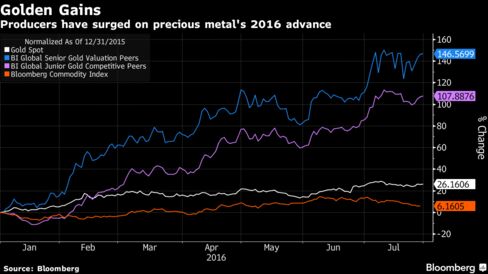
After years of decline, the price of gold has jumped 25 per cent since January as investors have sought refuge from slumping yields on savings accounts and bonds.

The rush to precious metals has given mining stocks a powerful boost. Shares of Barrick Gold Corp. and Kinross Gold Corp. have more than doubled since the start of the year, while Agnico Eagle Mines Ltd. (up 98 per cent) has also achieved eye-popping gains. Results released after the market closed on Wednesday offer hope that more gains may be ahead, although it also hinted at some potential problems.

Agnico Eagle was a standout, reporting profit of $19-million (U.S.) for the most recent quarter, nearly double the $10.1-million it generated in the same period a year earlier. The miner beat expectations for revenue and adjusted earnings and announced that it was boosting its dividend by 25 per cent (to 10 cents a quarter from 8 cents). It also said it had received the final permit necessary for construction to begin at its Meliadine gold project in Nunavut.

Barrick also reported a solid quarter, with profit of $138-million, or 12 cents a share, on revenue of $2.01-billion. While the earnings figures lagged forecasts, this quarter’s bottom line was a major improvement from a loss of $9-million in the same period last year.

Perhaps most important, the miner continued to pay down its loans and said it remained on target to achieve its target of $2-billion in debt reduction this year. Its all-in sustaining costs, a measure of all the expenses involved in producing gold, fell to $782 an ounce from $895 an ounce a year before.

In contrast, Kinross disappointed, reporting a loss of $25-million for the quarter, or 2 cents a share, which was below forecasts. Still, that marked a significant improvement from the same period last year, when it lost $83.2-million, or 7 cents a share.

The miner said its Tasiast project in Mauritania will resume normal operations in August. The West African mine has been closed since mid-June because of a dispute with the Mauritanian government, which alleged that some expatriate employees at the site had invalid work permits.

Such production problems reflect, in part, the increasing difficulty in finding new gold deposits. Miners are being forced to go to more remote locations and work in more difficult environments.

Gold’s supporters say global production of the metal is in long-term decline – a trend that may bolster the value of gold producers over the long haul.

But the great gold rally also has its skeptics. Investors in exchange-traded funds (ETFs) have accounted for most of the growth in demand for gold in recent months. Unlike jewellery buyers or central banks, ETF holders are a fickle crowd. They could decide to cash in their gains and dump the metal when the U.S. Federal Reserve begins to hike interest rates in earnest.

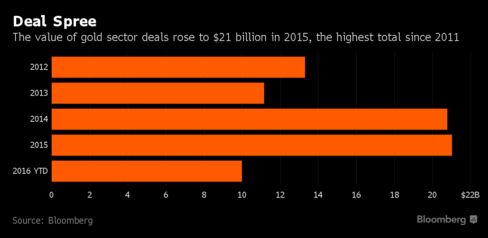
Miners themselves are staying wary. They have kept a tight grip on their wallets and refused to get caught up in public bidding wars for promising properties. They have typically done deals – notably Goldcorp Inc.’s $520-million acquisition of Kaminak Gold Corp. in May – by issuing shares rather than paying cash.

Euphoria is more in evidence among investors. They have driven gold producers’ shares to lofty multiples of their forecast profits. Kinross trades for nearly 50 times its expected earnings for the year, while Agnico Eagle changes hands for more than 90 times.

Full Article: Gold rally drives impressive results for Canadian miners

Disclaimer© 2010 Junior Gold ReportJunior Gold Report’ Newsletter: Junior Gold Report’s Newsletter is published as a copyright publication of Junior Gold Report (JGR). No Guarantee as to Content: Although JGR attempts to research thoroughly and present information based on sources we believe to be reliable, there are no guarantees as to the accuracy or completeness of the information contained herein. Any statements expressed are subject to change without notice. JGR, its associates, authors, and affiliates are not responsible for errors or omissions. Consideration for Services: JGR, it’s editor, affiliates, associates, partners, family members, or contractors may have an interest or position in featured, written-up companies, as well as sponsored companies which compensate JGR. JGR has been paid by the company written up. Thus, multiple conflicts of interests exist. Therefore, information provided herewithin should not be construed as a financial analysis but rather as an advertisement. The author’s views and opinions regarding the companies featured in reports are his own views and are based on information that he has researched independently and has received, which the author assumes to be reliable. No Offer to Sell Securities: JGR is not a registered investment advisor. JGR is intended for informational, educational and research purposes only. It is not to be considered as investment advice. Subscribers are encouraged to conduct their own research and due diligence, and consult with their own independent financial and tax advisors with respect to any investment opportunity. No statement or expression of any opinions contained in this report constitutes an offer to buy or sell the shares of the companies mentioned herein. Links: JGR may contain links to related websites for stock quotes, charts, etc. JGR is not responsible for the content of or the privacy practices of these sites. Release of Liability: By reading JGR, you agree to hold Junior Gold Report its associates, sponsors, affiliates, and partners harmless and to completely release them from any and all liabilities due to any and all losses, damages, or injuries (financial or otherwise) that may be incurred.

Forward Looking Statements
Except for statements of historical fact, certain information contained herein constitutes forward-looking statements. Forward looking statements are usually identified by our use of certain terminology, including “will”, “believes”, “may”, “expects”, “should”, “seeks”, “anticipates”, “has potential to”, or “intends’ or by discussions of strategy, forward looking numbers or intentions. Such forward-looking statements involve known and unknown risks, uncertainties and other factors which may cause our actual results or achievements to be materially different from any future results or achievements expressed or implied by such forward-looking statements. Forward-looking statements are statements that are not historical facts, and include but are not limited to, estimates and their underlying assumptions; statements regarding plans, objectives and expectations with respect to the effectiveness of the Company’s business model; future operations, products and services; the impact of regulatory initiatives on the Company’s operations; the size of and opportunities related to the market for the Company’s products; general industry and macroeconomic growth rates; expectations related to possible joint and/or strategic ventures and statements regarding future performance. Junior Gold Report does not take responsibility for accuracy of forward looking statements and advises the reader to perform own due diligence on forward looking numbers or statements.


TD’s $230-billion man goes maximum gold

0

By ERIC LAM AND ALLISON MCNEELY, Bloomberg News

In a world flush with central bank stimulus and swirling with volatility, Bruce Cooper is pushing for the one asset he says he can count on: gold.

TD Asset Management’s chief investment officer is adopting a more conservative approach to focus on capital preservation. Mr. Cooper sees gold as the best bet with the global economy stuck in neutral, and as loose central bank policy, the U.K. Brexit vote, and a looming U.S. presidential election stoke demand for havens. The firm shifted to “maximum overweight” in gold for its portfolios during the second quarter from a “modest overweight” according to Mr. Cooper’s latest market outlook report.

The U.K.’s vote to leave the European Union is likely to lead to ongoing stress in Europe, Cooper said. “We turned more positive on gold at the beginning of the year and then we reinforced that in the second quarter.”

Low interest rates buoying demand for gold and a potential second-half rise in crude prices bodes well for equities, Mr. Cooper said. His firm expects low to mid-single-digit returns on equity and low single-digit returns on fixed income. The role of fixed income in TD’s portfolio is more about diversification, stability and protecting against deflation than returns, he said.

‘Job One’

“Job one today is about capital preservation,” he said. “It’s not about shooting the lights out.”

TD Asset Management, the investment unit of Toronto-Dominion Bank, Canada’s second-largest lender, has a 10-person credit committee that wades through corporate balance sheets to pick high-quality investment-grade corporate bonds, Mr. Cooper said. They’re neutral on government bonds versus corporate credit.

“If we can pick up 100 basis points on a credit, we’re happy,” he said. “You wouldn’t look at corporate spreads and say this is the opportunity of a lifetime.”

Risky Bet

Even with recent stability in oil and the chance prices could increase to as high as $70 a barrel later this year, energy is a risky bet, he said.

“This is not a time to speculate on low-quality companies with weak balance sheets that don’t generate cash flow,” he said. “Clearly there’s a spread there. Suncor is generating cash-flow in this environment and there’s lots of companies that aren’t.”

Holding a mix of bonds is helping TD guard against “deflationary forces” emanating from Asia and Europe, he said. Although TD doesn’t expect deflation in Canada, high debt levels, disruptive technologies like Uber and AirBnB and China’s inability to reign in oversupply are contributing to a weak global outlook, he said.

“We’re cautious but not negative. This is not about canned goods and getting in the bunker,” he said.

TD says a potential catalyst may be if governments make a shift toward Canada’s policy of fiscal spending as a means of stoking growth, he said.

“The two governments to watch like a hawk are Germany and the United States,” he said. If Germany moves away from its traditional austerity approach or Hillary Clinton and the Democrats take power in the U.S. and unveil fiscal stimulus, that could shift the global economy into a more inflationary state.

TD is underweight the Canadian dollar on expectation that it will decline against U.S. dollar strength this year, he said.

“Between the U.S. economy looking a bit better and rates in the U.S. being a bit higher and the existential concerns about Europe, to me that feels like a recipe for the U.S. dollar being relatively firmly bid,” he said.

Full Article: TD’s $230-billion man goes maximum gold

Disclaimer© 2010 Junior Gold ReportJunior Gold Report’ Newsletter: Junior Gold Report’s Newsletter is published as a copyright publication of Junior Gold Report (JGR). No Guarantee as to Content: Although JGR attempts to research thoroughly and present information based on sources we believe to be reliable, there are no guarantees as to the accuracy or completeness of the information contained herein. Any statements expressed are subject to change without notice. JGR, its associates, authors, and affiliates are not responsible for errors or omissions. Consideration for Services: JGR, it’s editor, affiliates, associates, partners, family members, or contractors may have an interest or position in featured, written-up companies, as well as sponsored companies which compensate JGR. JGR has been paid by the company written up. Thus, multiple conflicts of interests exist. Therefore, information provided herewithin should not be construed as a financial analysis but rather as an advertisement. The author’s views and opinions regarding the companies featured in reports are his own views and are based on information that he has researched independently and has received, which the author assumes to be reliable. No Offer to Sell Securities: JGR is not a registered investment advisor. JGR is intended for informational, educational and research purposes only. It is not to be considered as investment advice. Subscribers are encouraged to conduct their own research and due diligence, and consult with their own independent financial and tax advisors with respect to any investment opportunity. No statement or expression of any opinions contained in this report constitutes an offer to buy or sell the shares of the companies mentioned herein. Links: JGR may contain links to related websites for stock quotes, charts, etc. JGR is not responsible for the content of or the privacy practices of these sites. Release of Liability: By reading JGR, you agree to hold Junior Gold Report its associates, sponsors, affiliates, and partners harmless and to completely release them from any and all liabilities due to any and all losses, damages, or injuries (financial or otherwise) that may be incurred.

Forward Looking Statements
Except for statements of historical fact, certain information contained herein constitutes forward-looking statements. Forward looking statements are usually identified by our use of certain terminology, including “will”, “believes”, “may”, “expects”, “should”, “seeks”, “anticipates”, “has potential to”, or “intends’ or by discussions of strategy, forward looking numbers or intentions. Such forward-looking statements involve known and unknown risks, uncertainties and other factors which may cause our actual results or achievements to be materially different from any future results or achievements expressed or implied by such forward-looking statements. Forward-looking statements are statements that are not historical facts, and include but are not limited to, estimates and their underlying assumptions; statements regarding plans, objectives and expectations with respect to the effectiveness of the Company’s business model; future operations, products and services; the impact of regulatory initiatives on the Company’s operations; the size of and opportunities related to the market for the Company’s products; general industry and macroeconomic growth rates; expectations related to possible joint and/or strategic ventures and statements regarding future performance. Junior Gold Report does not take responsibility for accuracy of forward looking statements and advises the reader to perform own due diligence on forward looking numbers or statements.

Here’s What Happens When the World Overdoses on Debt

0

by: Casey Research

Bonds are no longer assets. They’re liabilities.

You might find this hard to believe. After all, most folks think of bonds as a safe way to grow their money. For decades, you could make a decent return of 5% or more in government- and investment-grade bonds without risking big losses.

Not anymore.

These days, most bonds pay next to nothing. Some have negative interest rates, which means owners must pay interest on the bond instead of earning interest. If you own a bond that pays a negative interest rate, you’re guaranteed to lose money if you hold the bond to maturity.

And yet, folks are lining up to buy these bonds.

Dispatch readers know we’re in this mess because governments have gone mad trying to “stimulate” the economy. Central banks have cut rates more than 650 times since the 2008 financial crisis. Global rates are now at the lowest level in 5,000 years.

Low and negative rates have done nothing for the global economy. The U.S., Europe, Japan, and China—the world’s four biggest economies—are all growing at their slowest rates in decades. About the only thing these policies have done is put investors in serious danger.

Today, we’ll explain why the global financial system is more fragile than ever…and we’ll show you two proven ways to protect yourself.

• You can’t escape negative interest rates…

More than $13 trillion worth of government bonds now have negative rates. That’s more than one-third of all government bonds. Keep in mind, negative rates were unheard of until about two years ago.

Negative rates are taking over the corporate bond market too. Last week, Bloomberg Business reported that $512 billion worth of corporate bonds now have negative rates. There are now 11 times more corporate bonds with negative yields than there were at the start of the year.

There’s no reason to think negative rates will stop spreading.

Two weeks ago, German railroad company Deutsche Bahn AG sold 350 million euros worth of five-year bonds with a rate of -0.006%. It became the first non-financial company to issue bonds with a negative yield.

• You’re probably wondering who buys this garbage that’s guaranteed to lose money…

The answer is giant institutional investors. You see, many pension funds and insurance companies are required by law to own “safe” bonds like those issued by governments and companies in good financial shape. And right now, many of these bonds pay nothing in interest or charge you to own them.

This has made it very hard for institutions to meet investment return goals. For example, the average U.S. public pension fund made just 0.4% last year, the lowest average return since 2008. Most public pensions expect to make between 7% and 8% each year.

While rock-bottom rates have made life difficult for pension funds and insurance companies, they’ve also allowed companies to gorge on cheap money.

• U.S. corporations have borrowed more than $10 trillion in the bond market since 2007…

Last year, they issued a record $1.5 trillion in bonds. Corporate America is loading up on debt faster than it did during the dot-com bubble or before the 2008 financial crisis.

The same thing is happening around the world.

According to Bloomberg Business, the debt-to-earnings ratio for global companies hit a 12-year high in 2015.

Soaring corporate leverage led credit rating agency Standard & Poor’s (S&P) to downgrade 863 companies last year. That’s the most downgrades since 2009…when the world was in the middle of a global financial crisis.

• There’s no end in sight for this epic borrowing binge…

Last week, S&P said it expects global corporate debt to jump from $51 trillion today to $75 trillion by 2020. That’s a staggering 47% jump in four years.

This huge surge in corporate debt supposedly won’t be a problem as long as the economy keeps growing, companies pay their lenders, and rates stay low.

• Dispatch readers know those are dangerous assumptions…

As we said earlier, the global economy is barely growing.

And companies are already falling behind on their debts. According to MarketWatch, 100 corporations have already defaulted this year. That’s 50% more defaults than there were at the same time last year. At this rate, we will see more defaults this year than there were in 2009.

If this happens, lenders will take huge losses. This could spark a “credit crunch” where banks make fewer loans, cut lines of credit, and charge higher interest rates. In other words, the easy money could dry up. That could lead to even more defaults.

In other words, it’s extremely likely that the huge surge in corporate debt will create serious problems.

• S&P admits that the global financial system is very fragile…

CNBC reported last week:

“Central banks remain in thrall to the idea that credit-fueled growth is healthy for the global economy,” S&P said. “In fact, our research highlights that monetary policy easing has thus far contributed to increased financial risk, with the growth of corporate borrowing far outpacing that of the global economy.”

S&P says about half of the companies outside the financial sector are “highly leveraged” right now. Longtime Casey readers know companies with too much debt aren’t just a threat to themselves. They’re a threat to the entire global economy.

During the last financial crisis, the collapse of a handful of large, highly leveraged banks triggered a chain reaction that brought the entire global financial system to its knees.

S&P says we could see a repeat of the 2008 financial crisis if something “unforeseen” happens. CNBC reported:

“A worst-case scenario would be a series of major negative surprises sparking a crisis of confidence around the globe,” S&P said in the report. “These unforeseen events could quickly destabilize the market, pushing investors and lenders to exit riskier positions (‘Crexit’ scenario). If mishandled, this could result in credit growth collapsing as it did during the global financial crisis.”

• Regular readers know we’ve been warning about the huge buildup in corporate debt for months…

Now the mainstream media, which is typically behind the curve, is finally starting to catch on. This is a sign that we’re getting very close to a financial crisis.

We encourage you to protect yourself today. Step #1 is to own physical gold.

As we often say, gold is real money. It’s preserved wealth for centuries because it’s unlike any other asset on the planet. It’s durable, easy to transport, and easily divisible.

Its value doesn’t depend on a growing economy, a healthy financial system, or a responsible government. The price of gold often soars when things fall apart. It’s one of the only assets in the world like this.

If you’re worried about the global economy or financial system, the first thing you should do is own gold. We recommend you start by putting 10% to 15% of your money in gold. Once you feel like you own enough gold, you could put some money in silver. Regular readers know silver is also real money. Like gold, it often does well during times of turmoil.

We also encourage you to watch this short presentation. It explains why a collapse of the debt market is a threat to your wealth even if you don’t own a single stock or bond. That’s because this could trigger something far worse than anything we saw in 2008 or 2009.

As you’ll see, this coming crisis could reach you no matter where you are in the world. That’s why it’s so important you act today. Watch this free video to learn how to protect yourself.

Full Article: Here’s What Happens When the World Overdoses on Debt

Disclaimer© 2010 Junior Gold ReportJunior Gold Report’ Newsletter: Junior Gold Report’s Newsletter is published as a copyright publication of Junior Gold Report (JGR). No Guarantee as to Content: Although JGR attempts to research thoroughly and present information based on sources we believe to be reliable, there are no guarantees as to the accuracy or completeness of the information contained herein. Any statements expressed are subject to change without notice. JGR, its associates, authors, and affiliates are not responsible for errors or omissions. Consideration for Services: JGR, it’s editor, affiliates, associates, partners, family members, or contractors may have an interest or position in featured, written-up companies, as well as sponsored companies which compensate JGR. JGR has been paid by the company written up. Thus, multiple conflicts of interests exist. Therefore, information provided herewithin should not be construed as a financial analysis but rather as an advertisement. The author’s views and opinions regarding the companies featured in reports are his own views and are based on information that he has researched independently and has received, which the author assumes to be reliable. No Offer to Sell Securities: JGR is not a registered investment advisor. JGR is intended for informational, educational and research purposes only. It is not to be considered as investment advice. Subscribers are encouraged to conduct their own research and due diligence, and consult with their own independent financial and tax advisors with respect to any investment opportunity. No statement or expression of any opinions contained in this report constitutes an offer to buy or sell the shares of the companies mentioned herein. Links: JGR may contain links to related websites for stock quotes, charts, etc. JGR is not responsible for the content of or the privacy practices of these sites. Release of Liability: By reading JGR, you agree to hold Junior Gold Report its associates, sponsors, affiliates, and partners harmless and to completely release them from any and all liabilities due to any and all losses, damages, or injuries (financial or otherwise) that may be incurred.

Forward Looking Statements
Except for statements of historical fact, certain information contained herein constitutes forward-looking statements. Forward looking statements are usually identified by our use of certain terminology, including “will”, “believes”, “may”, “expects”, “should”, “seeks”, “anticipates”, “has potential to”, or “intends’ or by discussions of strategy, forward looking numbers or intentions. Such forward-looking statements involve known and unknown risks, uncertainties and other factors which may cause our actual results or achievements to be materially different from any future results or achievements expressed or implied by such forward-looking statements. Forward-looking statements are statements that are not historical facts, and include but are not limited to, estimates and their underlying assumptions; statements regarding plans, objectives and expectations with respect to the effectiveness of the Company’s business model; future operations, products and services; the impact of regulatory initiatives on the Company’s operations; the size of and opportunities related to the market for the Company’s products; general industry and macroeconomic growth rates; expectations related to possible joint and/or strategic ventures and statements regarding future performance. Junior Gold Report does not take responsibility for accuracy of forward looking statements and advises the reader to perform own due diligence on forward looking numbers or statements.

HOW TO PROTECT YOURSELF FROM THE ELITE

0

Kal Kotecha PhD

We’ve all encountered them, the intelligent, charming, and persuasive gentlemen who are deeply interested in our welfare and want to let us in on a plan they have to become wealthy.  One of the most skillful cons in history actually took place in the early 1820’s at the hands of a man known as Gregor MacGregor, who would use the existing political and economic atmosphere to con his contemporaries out of nearly $1.3m.1  — today, that amount would come to $3.6 billion. While it stands as a massive con game, it doesn’t even come close to that being pulled by the US government involving the gold in Fort Knox.

The con started in 1933 with Franklin Delano Roosevelt, the man commonly referred to by adherents as FDR.  The country was in the middle of a banking crisis that set the stage for a perfect con by the government, one couched in concern for the people of the US and framed in a way that made us believe it would benefit us.  This couldn’t be further from the truth, but just like the efforts of Gregor MacGregor, it’s a hallmark of confidence men that they sell us the belief that they care for us, when in fact they’re only interested in benefiting themselves.

What did this con include?  In the middle of a banking crisis, people had begun to lose confidence in the banks (there’s that word again, confidence), and it was the professed belief of FDR that ” the banks will take care of all needs, except, of course, the hysterical demands of hoarders, and it is my belief that hoarding during the past week has become an exceedingly unfashionable pastime in every part of our nation.”2 He made it clear that he believed that the banks were our salvation and that it was “safer to keep your money in a reopened bank than it is to keep it under the mattress.”2

Now, unlike the “good” MacGregor, there was no need for FDR to convince the American people of anything before the fact, he simply utilized the power of Executive Order to push EO 6073 through, known as the “Emergency Banking Act (EBA)”.  How suspicious was this maneuver?  It entered the house, and exited it, in 40 minutes flat.  Not a single printed copy was provided to the representatives.

So what exactly did all of this lead to? Simple… It prohibited the owning of gold coins, gold bullion, or gold certificates, and ordered that those in possession of such items surrender them to the government, which led to the construction of Fort Knox so that all of it could be stored.  We’ve not had any clear idea of how much gold has been inside since, and the government refuses to allow a 3rd party audit to answer that question.

All of this comes down to reveal one fundamental truth, the government has absolutely no interest in our welfare, nor in assuaging our concerns about what happened to all the gold that was confiscated in that vanishing act so long ago.  Thankfully, , in 1975, gold was once again made legal to be owned by the public.

Steve Forbes of the Forbes staff heralded this in an October 2012 article, stating that, “an unstable dollar is wreaking havoc on our capital markets, depriving us of money for productive enterprises and future enterprises while subsidizing government debt on a scale never before seen in U.S. history.”3

In essence, we’re discovering that the way our finances are being handled is having a devastating impact on the value of our wealth and stability of our income.  In fact, many people feel that their actual incomes are falling in value, and every day it becomes more difficult to maintain any sort of financial foundation.  So what are we to do?

According to Forbes the best response is to “remove legal barriers to alternative, nongovernment currencies in the U.S. We are allowed to use pounds, yen, euros and any other currency to carry out a transaction. Why not allow metal-based or -backed currencies to be used?”3 Currently attempts to do so have been devastating, with the Ur example being Bernard von NotHaus who created a company to produce coins and bills known as Liberty Dollars backed by Gold and Silver Bullion.  The government’s reaction was rapid and clear, he is currently facing significant jail time as a result.3

However it appears that there is a movement to start removing this impediment, and some of them are starting in the most unusual of places, specifically in Utah. “eliminate all taxes on transactions in gold and silver bullion.”3 Followed by a decree that “U.S.-minted gold and silver coins are legal as currency.”3 Which, really, is just a return to the days before the 1933 decree, when our government was in the business of issuing gold-based dollars.

With these clear signs that gold is on the rise as a valid currency again, it only makes sense to invest in these precious metals in preparation for a massive surge in their overall value.  American finance may be in trouble as the promissory notes issued by our mints rise and fall in value, but gold retains its value regardless of our nation’s economy.  Now that’s a smart investment.

Happy Investing!


Kal Kotecha PhD

References

1 The king of con-men http://www.economist.com/news/christmas-specials/21568583-biggest-fraud-history-warning-professional-and-amateur-investors

2 Hiding the Elephant: Fort Knox’s Vanishing Act https://www.juniorgoldreport.com/hiding-the-elephant-fort-knoxs-vanishing-act/

3 Gold Can Save Us from Disaster http://www.forbes.com/sites/steveforbes/2012/10/03/gold-can-save-us-from-disaster/#2dd92e10346e

4 The Great Confiscation: Gold ownership was illegal in the USA from 1933 to 1975 http://goldcoin.org/numismatics/the-great-confiscation-gold-ownership-was-illegal-in-the-usa-from-1933-to-1975/165/

Disclaimer© 2010 Junior Gold ReportJunior Gold Report’ Newsletter: Junior Gold Report’s Newsletter is published as a copyright publication of Junior Gold Report (JGR). No Guarantee as to Content: Although JGR attempts to research thoroughly and present information based on sources we believe to be reliable, there are no guarantees as to the accuracy or completeness of the information contained herein. Any statements expressed are subject to change without notice. JGR, its associates, authors, and affiliates are not responsible for errors or omissions. Consideration for Services: JGR, it’s editor, affiliates, associates, partners, family members, or contractors may have an interest or position in featured, written-up companies, as well as sponsored companies which compensate JGR. JGR has been paid by the company written up. Thus, multiple conflicts of interests exist. Therefore, information provided herewithin should not be construed as a financial analysis but rather as an advertisement. The author’s views and opinions regarding the companies featured in reports are his own views and are based on information that he has researched independently and has received, which the author assumes to be reliable. No Offer to Sell Securities: JGR is not a registered investment advisor. JGR is intended for informational, educational and research purposes only. It is not to be considered as investment advice. Subscribers are encouraged to conduct their own research and due diligence, and consult with their own independent financial and tax advisors with respect to any investment opportunity. No statement or expression of any opinions contained in this report constitutes an offer to buy or sell the shares of the companies mentioned herein. Links: JGR may contain links to related websites for stock quotes, charts, etc. JGR is not responsible for the content of or the privacy practices of these sites. Release of Liability: By reading JGR, you agree to hold Junior Gold Report its associates, sponsors, affiliates, and partners harmless and to completely release them from any and all liabilities due to any and all losses, damages, or injuries (financial or otherwise) that may be incurred.

Forward Looking Statements
Except for statements of historical fact, certain information contained herein constitutes forward-looking statements. Forward looking statements are usually identified by our use of certain terminology, including “will”, “believes”, “may”, “expects”, “should”, “seeks”, “anticipates”, “has potential to”, or “intends’ or by discussions of strategy, forward looking numbers or intentions. Such forward-looking statements involve known and unknown risks, uncertainties and other factors which may cause our actual results or achievements to be materially different from any future results or achievements expressed or implied by such forward-looking statements. Forward-looking statements are statements that are not historical facts, and include but are not limited to, estimates and their underlying assumptions; statements regarding plans, objectives and expectations with respect to the effectiveness of the Company’s business model; future operations, products and services; the impact of regulatory initiatives on the Company’s operations; the size of and opportunities related to the market for the Company’s products; general industry and macroeconomic growth rates; expectations related to possible joint and/or strategic ventures and statements regarding future performance. Junior Gold Report does not take responsibility for accuracy of forward looking statements and advises the reader to perform own due diligence on forward looking numbers or statements.

CMC partner files updated mine plans for Radcliff

0

2016-07-27 08:49 ET – News Release

Mr. Jack Bal reports

UPDATE ON BISHOP MILL OPERATIONS AND RADCLIFF PROPERTY JOINT VENTURE

Pruett-Ballarat Inc. (PBI), the mine operator and CMC Metals Ltd.’s joint venture partner at the Radcliff property, has filed an updated alternative small and remote mine rescue plan, escape and evacuation plan, and a ventilation plan (updated since the plan referenced in the news release dated Oct. 22, 2014), and has renewed national mine operating permits at the Radcliff mine located in the west-central portion of the Panamint range, Inyo county, near Ballarat, Calif.

PBI has also installed an upgraded ventilation system, including renewed anemometer and gas detection equipment. Preparations are in an advanced stage for restart of underground mining operations following the recent completion of MSHA (US Mine Safety & Health Administration) training and certification of miners (including surface training for surface support and Bishop Mill personnel) and the successful renewal of the PBI-held State mine blasting license. The current mine development has advanced the 5510-level drift into mineralized material, with long-run development potential remaining at the upper elevations (between the 4530 to 6580 feet elevation levels above mean sea level). Mining re-starts in an area of sampling-indicated high-interest mineralization, as reported by the Company on June 25, 2015. The Company’s business plan is to selectively mine “high grade” portions 1 of an indicated resource, with anticipated run-of-mine grade to be calibrated by sampling of faces prior to blasting, and sub-sampling of mined material at a run-of-mine sub-sampling plant located at the 5510-level portal. The sub-sampling station has been recently installed, subsequent to previous technical disclosure (refer NR of January 21, 2015).

In parallel with the work at the Radcliff Mine, the Company has been focused on planning and updated budget work to allow re-start of operations at its 100% owned Bishop Mill. The Company is working with the regulator at the California EPA, Regional Water Quality Control Board, Lahontan Region to finalize a vadose zone monitoring solution for the constructed tailings impoundment, such that the monitoring well base is located proximal to the tailing sump but will minimize disturbance of the as-built earthen containment construction and in-place liner. The supplier of a bird-netting solution has confirmed that a net has been shipped from Chicago: the Company continues to finalize wildlife protection requirements for the tailings facility. The plant team will re-staff in the near term, and is also reviewing technologies to allow the ‘dry’ capture and stacking of tailings.

COO Ian Graham commented: “The recently completed capital raise is permitting the Company to move forward on equipping, staffing and making bond arrangements for the Mill at Bishop, whilst simultaneously working with our partner Pruett-Ballarat Inc. to commence the mining of Mill feed: the Mill and mining JV teams are anxious to drive forward and deliver free cash flow in Q4, 2016.”

1 The presence of “high grade material” at Radcliff is documented in the NI43-101 compliant technical report filed on SEDAR. The mineral resources as stated January 9, 2013, remain current mineral resources.

We seek Safe Harbor.

Disclaimer© 2010 Junior Gold ReportJunior Gold Report’ Newsletter: Junior Gold Report’s Newsletter is published as a copyright publication of Junior Gold Report (JGR). No Guarantee as to Content: Although JGR attempts to research thoroughly and present information based on sources we believe to be reliable, there are no guarantees as to the accuracy or completeness of the information contained herein. Any statements expressed are subject to change without notice. JGR, its associates, authors, and affiliates are not responsible for errors or omissions. Consideration for Services: JGR, it’s editor, affiliates, associates, partners, family members, or contractors may have an interest or position in featured, written-up companies, as well as sponsored companies which compensate JGR. JGR has been paid by the company written up. Thus, multiple conflicts of interests exist. Therefore, information provided herewithin should not be construed as a financial analysis but rather as an advertisement. The author’s views and opinions regarding the companies featured in reports are his own views and are based on information that he has researched independently and has received, which the author assumes to be reliable. No Offer to Sell Securities: JGR is not a registered investment advisor. JGR is intended for informational, educational and research purposes only. It is not to be considered as investment advice. Subscribers are encouraged to conduct their own research and due diligence, and consult with their own independent financial and tax advisors with respect to any investment opportunity. No statement or expression of any opinions contained in this report constitutes an offer to buy or sell the shares of the companies mentioned herein. Links: JGR may contain links to related websites for stock quotes, charts, etc. JGR is not responsible for the content of or the privacy practices of these sites. Release of Liability: By reading JGR, you agree to hold Junior Gold Report its associates, sponsors, affiliates, and partners harmless and to completely release them from any and all liabilities due to any and all losses, damages, or injuries (financial or otherwise) that may be incurred.

Forward Looking Statements
Except for statements of historical fact, certain information contained herein constitutes forward-looking statements. Forward looking statements are usually identified by our use of certain terminology, including “will”, “believes”, “may”, “expects”, “should”, “seeks”, “anticipates”, “has potential to”, or “intends’ or by discussions of strategy, forward looking numbers or intentions. Such forward-looking statements involve known and unknown risks, uncertainties and other factors which may cause our actual results or achievements to be materially different from any future results or achievements expressed or implied by such forward-looking statements. Forward-looking statements are statements that are not historical facts, and include but are not limited to, estimates and their underlying assumptions; statements regarding plans, objectives and expectations with respect to the effectiveness of the Company’s business model; future operations, products and services; the impact of regulatory initiatives on the Company’s operations; the size of and opportunities related to the market for the Company’s products; general industry and macroeconomic growth rates; expectations related to possible joint and/or strategic ventures and statements regarding future performance. Junior Gold Report does not take responsibility for accuracy of forward looking statements and advises the reader to perform own due diligence on forward looking numbers or statements.
Major Lithium Acquisition

0


Please click the following link to to read the report

 > Major Lithium Acquisition <

Disclaimer© 2010 Junior Gold ReportJunior Gold Report’ Newsletter: Junior Gold Report’s Newsletter is published as a copyright publication of Junior Gold Report (JGR). No Guarantee as to Content: Although JGR attempts to research thoroughly and present information based on sources we believe to be reliable, there are no guarantees as to the accuracy or completeness of the information contained herein. Any statements expressed are subject to change without notice. JGR, its associates, authors, and affiliates are not responsible for errors or omissions. Consideration for Services: JGR, it’s editor, affiliates, associates, partners, family members, or contractors may have an interest or position in featured, written-up companies, as well as sponsored companies which compensate JGR. JGR has been paid by the company written up. Thus, multiple conflicts of interests exist. Therefore, information provided herewithin should not be construed as a financial analysis but rather as an advertisement. The author’s views and opinions regarding the companies featured in reports are his own views and are based on information that he has researched independently and has received, which the author assumes to be reliable. No Offer to Sell Securities: JGR is not a registered investment advisor. JGR is intended for informational, educational and research purposes only. It is not to be considered as investment advice. Subscribers are encouraged to conduct their own research and due diligence, and consult with their own independent financial and tax advisors with respect to any investment opportunity. No statement or expression of any opinions contained in this report constitutes an offer to buy or sell the shares of the companies mentioned herein. Links: JGR may contain links to related websites for stock quotes, charts, etc. JGR is not responsible for the content of or the privacy practices of these sites. Release of Liability: By reading JGR, you agree to hold Junior Gold Report its associates, sponsors, affiliates, and partners harmless and to completely release them from any and all liabilities due to any and all losses, damages, or injuries (financial or otherwise) that may be incurred.

Forward Looking Statements
Except for statements of historical fact, certain information contained herein constitutes forward-looking statements. Forward looking statements are usually identified by our use of certain terminology, including “will”, “believes”, “may”, “expects”, “should”, “seeks”, “anticipates”, “has potential to”, or “intends’ or by discussions of strategy, forward looking numbers or intentions. Such forward-looking statements involve known and unknown risks, uncertainties and other factors which may cause our actual results or achievements to be materially different from any future results or achievements expressed or implied by such forward-looking statements. Forward-looking statements are statements that are not historical facts, and include but are not limited to, estimates and their underlying assumptions; statements regarding plans, objectives and expectations with respect to the effectiveness of the Company’s business model; future operations, products and services; the impact of regulatory initiatives on the Company’s operations; the size of and opportunities related to the market for the Company’s products; general industry and macroeconomic growth rates; expectations related to possible joint and/or strategic ventures and statements regarding future performance. Junior Gold Report does not take responsibility for accuracy of forward looking statements and advises the reader to perform own due diligence on forward looking numbers or statements.